Asset-Backed Securities
Advisory services for preparing ABS for trading on the capital market, establishing a special purpose company, and obtaining approvals.
What is ABS?
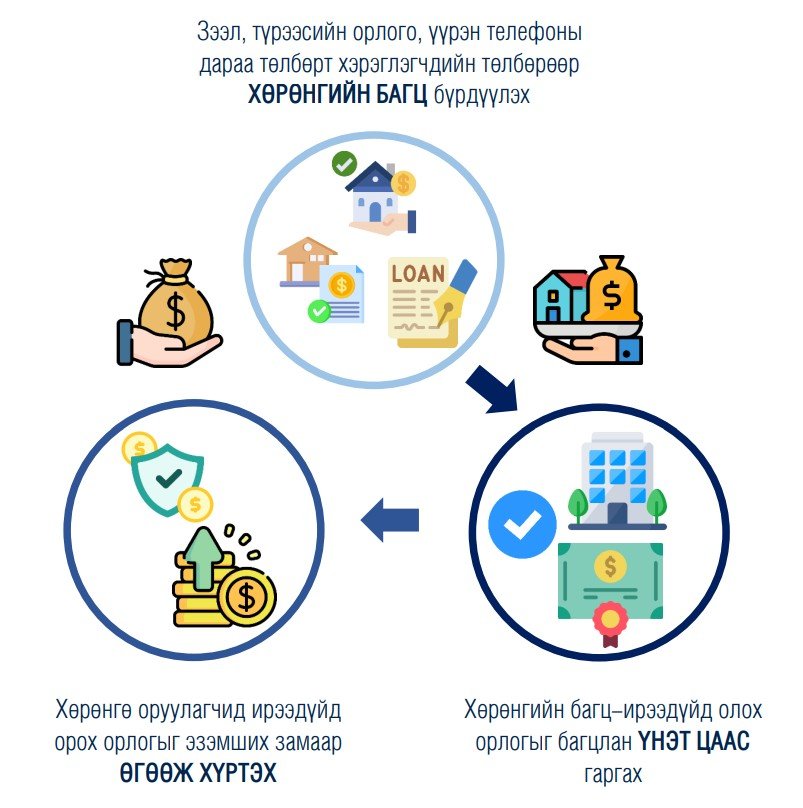
Asset-Backed Securities are securitized financial instruments offered to the public in an open or closed scope by forming an asset pool from future income and establishing a special purpose company.
Advantages
Fixed return: Opportunity to receive quarterly coupon payments
Protected from investment risk: Non-performing loans in the loan pool will always remain at 0%, and protection against interruption of coupon and repayment of the securities is provided through the payment waterfall scheme and the assets of the risk reserve fund.
Good liquidity: Short-term investment returns are high, and under conditions of trading at a discounted price, both the seller and the buyer have a sufficiently high rate of return, creating the opportunity to compete in liquidity on the exchange.
New financing channel: It is becoming a new channel for banks and financial institutions to attract financing through the capital market.
Tax 5%: The tax on stock dividend returns, open bond returns, and ABS interest income is 5%.
What is securitization?
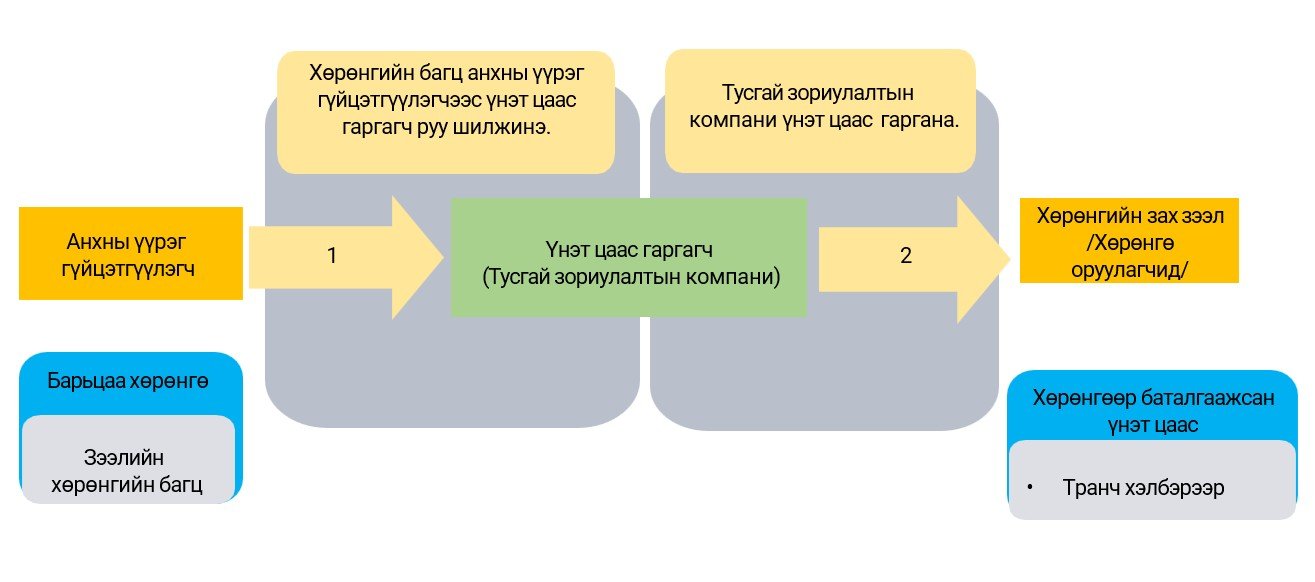
Securitization is the process by which financial institutions raise the funding they need from the market by issuing asset-backed securities based on the loan assets and other financial receivables on their balance sheet. It is important for transferring and dispersing portfolio risk, and for increasing the liquidity of long-term loan assets.
Special Purpose Company (SPC)
Special Purpose Company (SPC) According to Article 12, Clause 12.12.5 of the Law on Asset-Backed Securities, an SPC is prohibited from hiring employees on the basis of an employment contract or other agreements. According to Article 12, Clause 12.13, Article 19, Clause 19.1, and Article 20, Clause 20.1 of the Law on Asset-Backed Securities, services related to carrying out the activities provided by law shall be performed by third parties on a contractual basis.
- Manage the SPC’s assets in accordance with the interests of the investors
- Transfer the securities payments
- Provide investors with the necessary reports and information
- Maintain financial statements and accounting related to the securities asset pool separately from the records of the primary obligor, originator, seller, and its own assets
- Prepare accounting reports, maintain them in accordance with IFRS, prepare related entries and records, and present them to the relevant parties
- Prepare and compile tax documents on time, prepare relevant calculations and documents for the securities issuer, and pay the required taxes;
- Perform the functions of the secretary of the board of directors and organize board meetings
- Provide company secretarial services, prepare all documents and legal documents, and provide other administrative services of the company
- Communicate with servicing banks, receive reports and information from them, consolidate and monitor such information, and conduct research and analysis on resolving issues related to assets
- Arrange and prepare for the audit of the SPC’s reports
- Whether the process of establishing the SPC and its registration in the legal entity registry comply with the law, and whether its certificate and special license are valid;
- Whether the decision to issue ABS complies with the law;
- Whether the SPC’s charter and the procedures used in its core operations comply with the law;
- Whether the agreements and transactions concluded with the parties participating in the issuance of secured securities, namely the primary obligor and the seller, such as asset transfer, sale and purchase, service provision, and trust asset management agreements, comply with the law, and whether there are consequences that may adversely affect the operations;
- Whether the ABS issuer has a conflict of interest with the trust asset manager and other participants;
- Whether, by selecting through random sampling depending on each type of asset in the asset pool, the legal criteria established by the securities issuer are being met;
- Whether the agreements and transactions related to ensuring the performance of obligations from the pool assets comply with the law, and whether the agreements and transactions include conditions obligating that any claim rights related to the subject of the obligation shall not be transferred or exercised, or prohibiting or restricting such transfer.
Basic Concepts of Asset-Backed Securities
“MICG” LLC organized practical recommendations and training for NBFIs planning to issue Asset-Backed Securities, focused on the opportunities to raise and mobilize funds from the capital market.
Presentation content: ABS policy regulation, current market conditions, FRC criteria, NBFI prudential ratios, and basic concepts of ABS